

AusAct 2027: Call for Proposals
Australasian Actor Training Conference
Victorian College of the Arts, University of Melbourne
12–14 February 2027
Locating Actor Training: Place, Country, and Practice
“Locating” has multiple meanings, such as identifying where training happens, situating practice culturally and historically, and questioning where Australian actor training currently is positioned overall.
The Victorian College of the Arts sits at an intersection of Country, on lands of the Wurundjeri Woi-wurrung and Bunurong peoples, lands that have long been places of gathering, exchange, storytelling and embodied knowledge.
Where does actor training take place? Actor training never occurs nowhere. It happens on Country, within institutions, studios, rehearsal rooms, communities, private schools, regional centres, digital environments and increasingly across hybrid spaces. It also takes place within perhaps its most immediate location, the body of the performer. Yet many of the practices that continue to shape contemporary Australian actor training emerged elsewhere. Stanislavski, Meisner, Lecoq, Laban, Linklater, Fitzmaurice, Viewpoints and numerous other influential practices carry with them particular histories, philosophies, cultures and understandings of the actor. What happens when these practices are relocated?
What does it mean to teach European and Euro-American legacy pedagogies on colonised land? How are they changed by Australian geography, culture, histories, communities and bodies? And at what point does adaptation become the creation of something new?
AusAct 2027 invites actor trainers, performers, directors, researchers, students and institutions to consider place as an active force within training itself. We ask what it might mean to locate, and perhaps relocate, actor training within the cultural, geographical and embodied realities of contemporary Australia.
Note: AusAct 2027 is not limited to actor training. We warmly invite contributions from across the broader field of performer training, including musical theatre, dance, movement, voice, singing, physical performance and interdisciplinary practices.
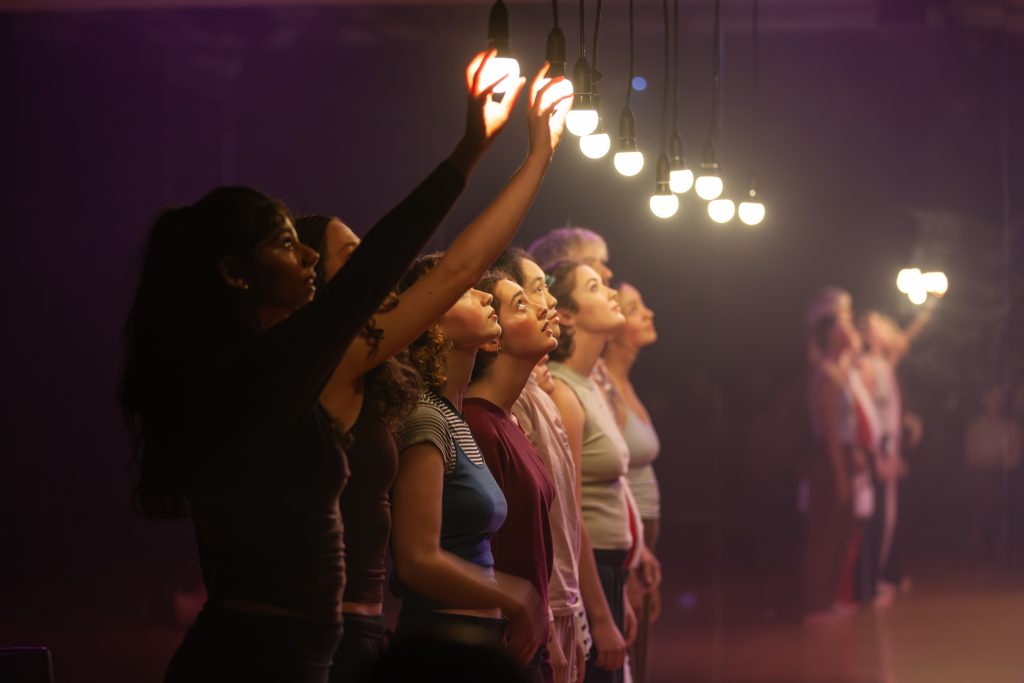
Scared on Top Scared on Bottom
The University of Melbourne Theatre Company 2027
Director Cooper MacDonald
Photographer Amanda Hitten
Topics may include, but not restricted to:
- Country, Land and Actor Training: How might Country, landscape, environment and location inform the ways actors train? What responsibilities emerge when inherited actor-training practices are taught on colonised land? How might First Nations knowledges challenge assumptions embedded within dominant Western training traditions?
- Imported Practices / Local Bodies: What happens when actor-training methodologies developed in Europe, Britain or North America are relocated to Australia and Aotearoa/New Zealand? How are Stanislavski, Meisner, Lecoq, Laban, Linklater, and other traditions already being adapted? When does adaptation become a distinctive new practice?
- Is There an Australian Actor Training? Can we meaningfully speak of an Australian approach to actor training? If so, what constitutes it? Is it defined by geography, multiculturalism, Indigenous histories, migration, language, climate, theatre traditions or something else entirely? Or should we resist the idea of a singular Australian training identity?
- The Body as Place: How might we understand the body as a place containing histories, identities, languages, memories, cultures and experiences? What happens when institutional training practices encounter bodies that do not conform to the assumptions upon which those practices were originally constructed?
- Belonging / Placelessness: Who has historically been imagined as the “ideal” acting student? Who belongs within contemporary actor-training institutions, and who may still experience themselves as out of place, displaced or unplaceable? How might training respond to cultural difference, disability, neurodiversity, gender, age, class and different embodied histories?
- Where Training Happens: Actor training now occurs across universities, conservatoires, independent studios, theatre companies, community organisations, private schools, short courses, regional centres and online environments. How does the place and structure of training determine what can be taught, who can access it and what kinds of actors emerge?
- Regional / Metropolitan: What changes when actor training occurs outside major metropolitan centres? How might regional environments produce different approaches to community, ensemble, place and performance? Conversely, what assumptions about professional practice are embedded within metropolitan conservatoire models?
- Digital Places: What constitutes “place” when training occurs online? Can ensemble, presence, embodiment and intimacy exist across networked environments? How are AI, virtual production, motion capture, XR and mediated performance creating new sites for actor training?
- Training and Migration: Australia’s actor-training landscape exists within one of the world’s most culturally diverse countries. How are migration, multilingualism, diasporic identity and intercultural experience reshaping assumptions about voice, body, text, character and performance?
- Place as Pedagogy: What happens when we ask the question “What is this place teaching us?” How might architecture, landscape, climate, community, history and Country become active components of pedagogy rather than backgrounds to it?
- The Singing Body / Voice as Place: Musical theatre training brings acting, singing, voice, music and movement into a shared embodied practice. How might the musical theatre performer be understood as a site of identity, culture, history and place? How are inherited musical theatre voice and performance traditions being adapted for contemporary Australian performers? How might culturally diverse voices, Australian voices and different embodied and vocal identities restructure musical theatre pedagogy?
- Dancing Bodies / Movement, Place and Training: Dance and movement practices are inseparable from bodies, spaces and the cultural traditions from which they emerge. How does place determine the way we teach and understand movement? What happens when dance and movement forms developed in particular cultural, historical or geographical contexts are relocated into Australian training institutions? Can distinctly Australian approaches to movement and dance training emerge from the places and communities in which we practise?
- Training Across Disciplines: Acting / Singing / Dancing: Where do acting, voice, singing, dance and movement meet within contemporary performer training? Musical theatre and interdisciplinary performance increasingly require performers to move between disciplines, yet training is often divided into specialised practices and departments. What is gained (or lost) through these divisions? How might integrated approaches to acting, singing and dancing create new forms of performer training?
EOI Formats:
- 20-minute Papers: research, provocations, case studies and theoretical investigations.
- 90-minute Practical Workshops: embodied demonstrations of training practices.
- 20-minute Practice Provocations: laboratory style demonstrations of an exercise/practice and contextualise where it comes from, how you have adapted it and why.
We encourage submissions from established academics and practitioners, as well as postgraduate students and early-career artists. Interdisciplinary proposals and collaborations between institutions, artists, and communities are also warmly welcomed. AusAct is committed to inclusive and accessible practices. We aim to foster a collegial environment where dialogue is encouraged and difference is respected. The 2027 conference will continue to showcase Australasian excellence while also interrogating its assumptions.
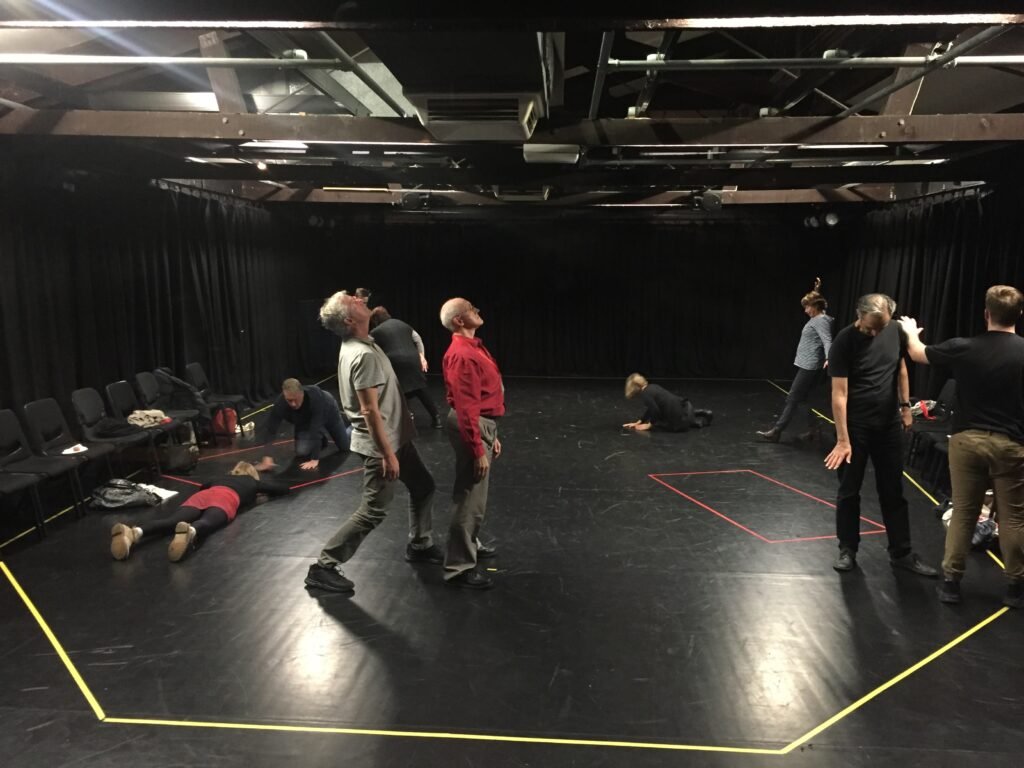
Workshop demonstration by Mark Seton, CSU, 2018
Paper Presentations
20-minute Papers invite research, critical provocations, case studies and theoretical investigations that engage with the questions and themes of AusAct 2027. Papers may examine established or emerging approaches to actor and performer training, interrogate current pedagogical practices, or propose new ways of thinking about place, Country, body and practice.
We particularly welcome papers that create dialogue between theory and practice, and that consider how the places, cultures, histories, institutions and bodies in which training occurs might shape the training itself.
Submissions should include:
- Title
- 200–250 word abstract outlining the central question, argument or investigation
- Connection to the AusAct 2027 conference theme
- Brief presenter biography (100 words)
- Any technical or accessibility requirements
- Dietary requirements (for catering purposes)
Workshops
90-minute Practical Workshops invite participants into an extended, embodied exploration of actor and performer training practices. These sessions should be participatory and practice-led, providing sufficient time for presenters to introduce, demonstrate and actively investigate a particular methodology, exercise, training approach or emerging practice with participants.
Workshops may draw from acting, voice, movement, dance, musical theatre, physical performance or interdisciplinary performer training, and should engage with the AusAct 2027 themes of place, Country, body and/or practice.
Submissions should include:
- Title
- 250–300 word workshop description
- Level of participation, e.g., beginners, intermediate, advanced
- Training practice, methodology or area being explored
- Connection to the AusAct 2027 conference theme
- What participants will practically experience
- Maximum or preferred participant numbers
- Space, equipment and accessibility requirements
- Brief presenter biography (100 words)
- Dietary requirements (for catering purposes)
Practice Provocations
A Practice Provocation is a short, laboratory-style demonstration that places actor and performer training practice at the centre of the conversation. Presenters will demonstrate an exercise, training methodology or practical experiment and briefly contextualise where the practice comes from, how it has been adapted or relocated within their own teaching/training context, and why.
Practice Provocations should engage participants wherever possible and connect to the AusAct 2027 theme of place, Country, body and/or practice.
Submissions should include:
- Title
- 150–200 word description of the practice or exercise
- Where the practice originates and/or the influences informing it
- How and why you have adapted, modified or relocated the practice
- What participants will experience or investigate
- Any space, equipment or accessibility requirements
- Brief presenter biography (100 words)
- Dietary requirements (for catering purposes)
Submission information
Deadline for proposals: October 5, 2026.
Notification of acceptance: Friday October 30, 2026.
All proposals must be submitted to: robelewis@csu.edu.au and stephanie.kehoe@unimelb.edu.au
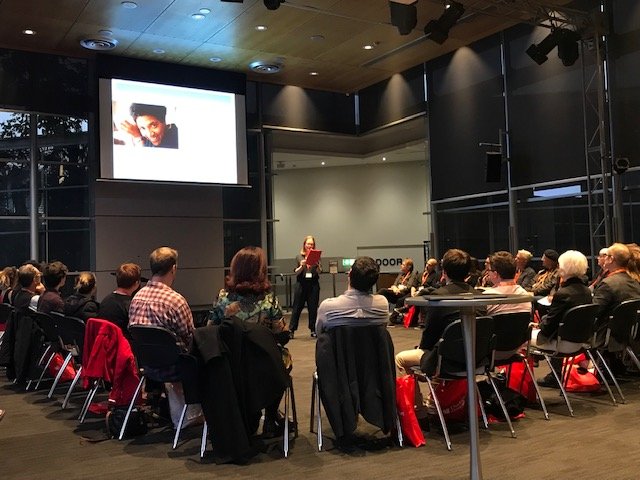
Jessica Hartley Keynote Presentation, QUT, 2019